
Two solvents that expose different weaknesses
Alcohol and white spirit are both common in real use, and both are frequently included in a material specification, but they attack a surface in different ways. Alcohol is polar and relatively aggressive toward many binder systems, particularly those that are not well cross linked. White spirit is non polar and tends to attack the oils, plasticisers and waxes used to control slip and hand feel.
Because the mechanisms differ, a surface that resists one well may still be sensitive to the other. That is why a specification that names both is more useful than a general claim of chemical resistance.
Why printed surfaces are the most exposed
Print introduces pigment and binder into the surface, and areas of heavy ink coverage generally behave differently from lightly printed areas. Where ink lies thickly, the topcoat over it has to encapsulate the ink completely; if coverage is incomplete, solvent reaches the ink and can lift colour or dull the finish.
This is the main reason chemical resistance is usually better on a plain or lightly printed article than on a heavily patterned one. It also means chemical resistance should always be tested on the actual printed pattern, not on a plain swatch of the same base.

How resistance is built into the surface
Three levers control solvent resistance. The first is cross linking density in the topcoat: a more densely cross linked film resists solvent penetration longer, at the cost of some flexibility. The second is topcoat coverage, which must be sufficient to fully encapsulate the print. The third is the choice of binder chemistry, since some systems are inherently more resistant to polar solvents and others to non polar ones.
These levers interact with the rest of the specification. Increasing cross linking to improve solvent resistance reduces the elastic range available for flex endurance, which is why a project that needs both should identify which requirement governs and design around it rather than trying to maximise both.
How to specify and verify the requirement
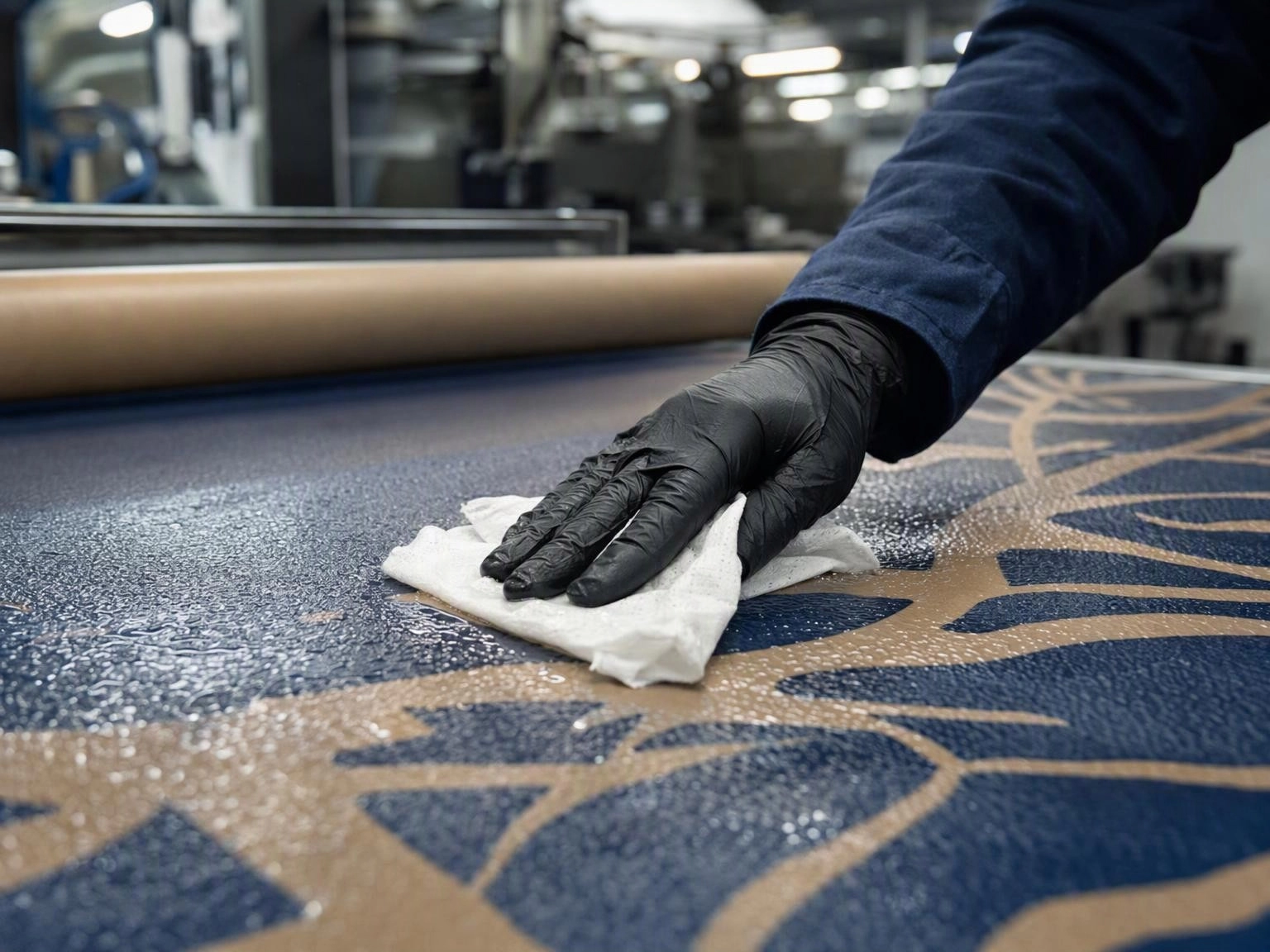
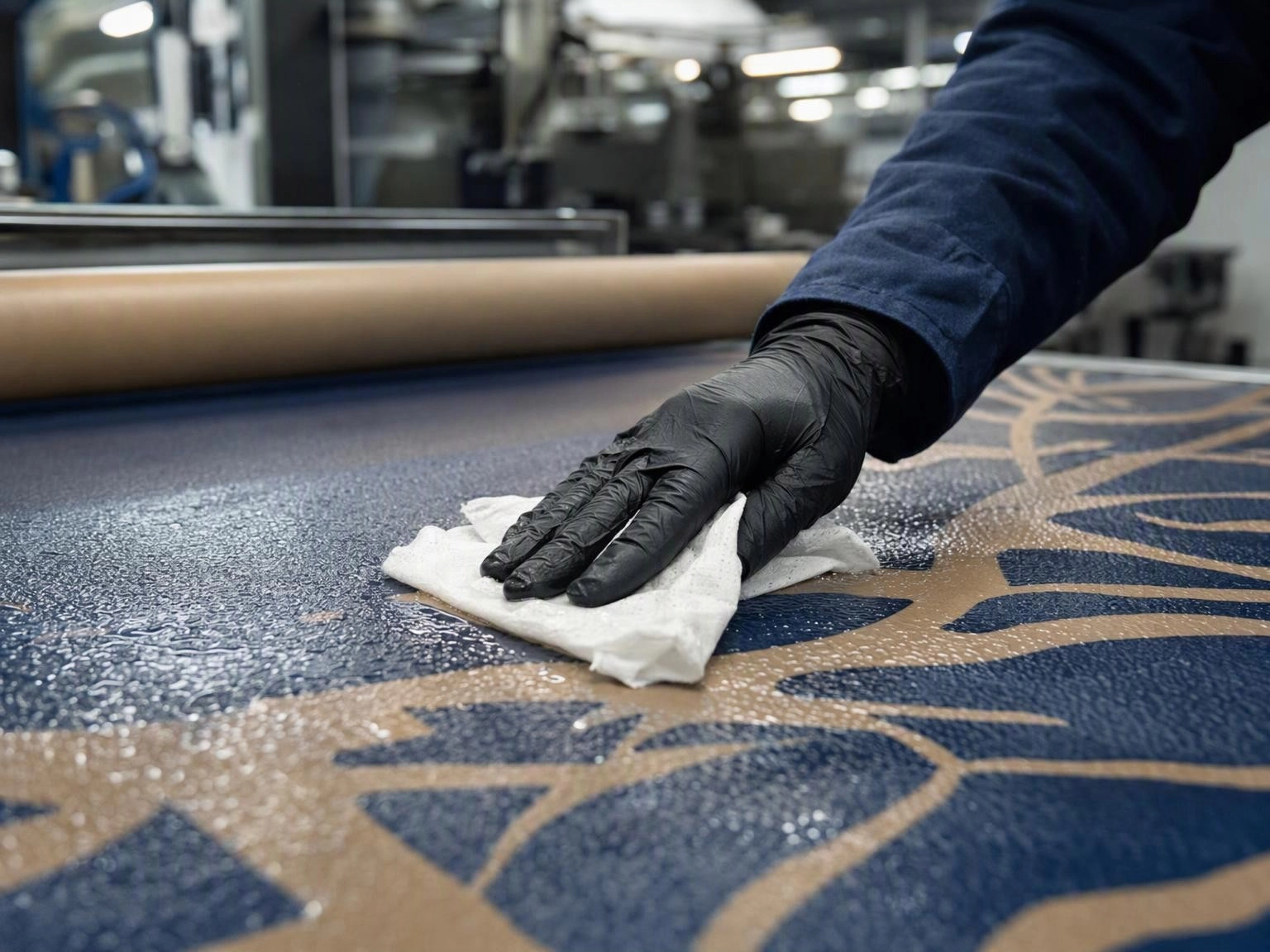
The most reliable way to specify chemical resistance is to name the substance, the concentration, the contact method and the exposure time, then state the acceptance criterion. Common contact methods are a rub with a saturated cloth, a drop left in place for a set period, and a full immersion test. Each produces a different result, so the method must be stated alongside the outcome.
Acceptance is usually judged on visible change: loss of gloss, colour transfer, surface softening, or a permanent mark remaining after the substance has been removed and the sample allowed to recover. Allowing a recovery period before assessment is important, because some surfaces regain appearance after the solvent evaporates, and judging immediately can produce an unfair failure.
Reducing the risk in practical use
Beyond specification, the practical risks are predictable. Alcohol hand sanitiser, cleaning wipes, adhesive removers and printing solvents are the usual offenders in the field. Where a product is likely to meet them, the surface should be tested against the specific product formulation rather than a generic laboratory chemical, because additives such as fragrance, emollients and dyes can change how the solvent behaves on the surface.
Testing the real product also gives the sales and after care teams a defensible answer. A material that has been tested against a named commercial sanitiser and survived gives a far better customer response than a general statement that the surface is solvent resistant.