
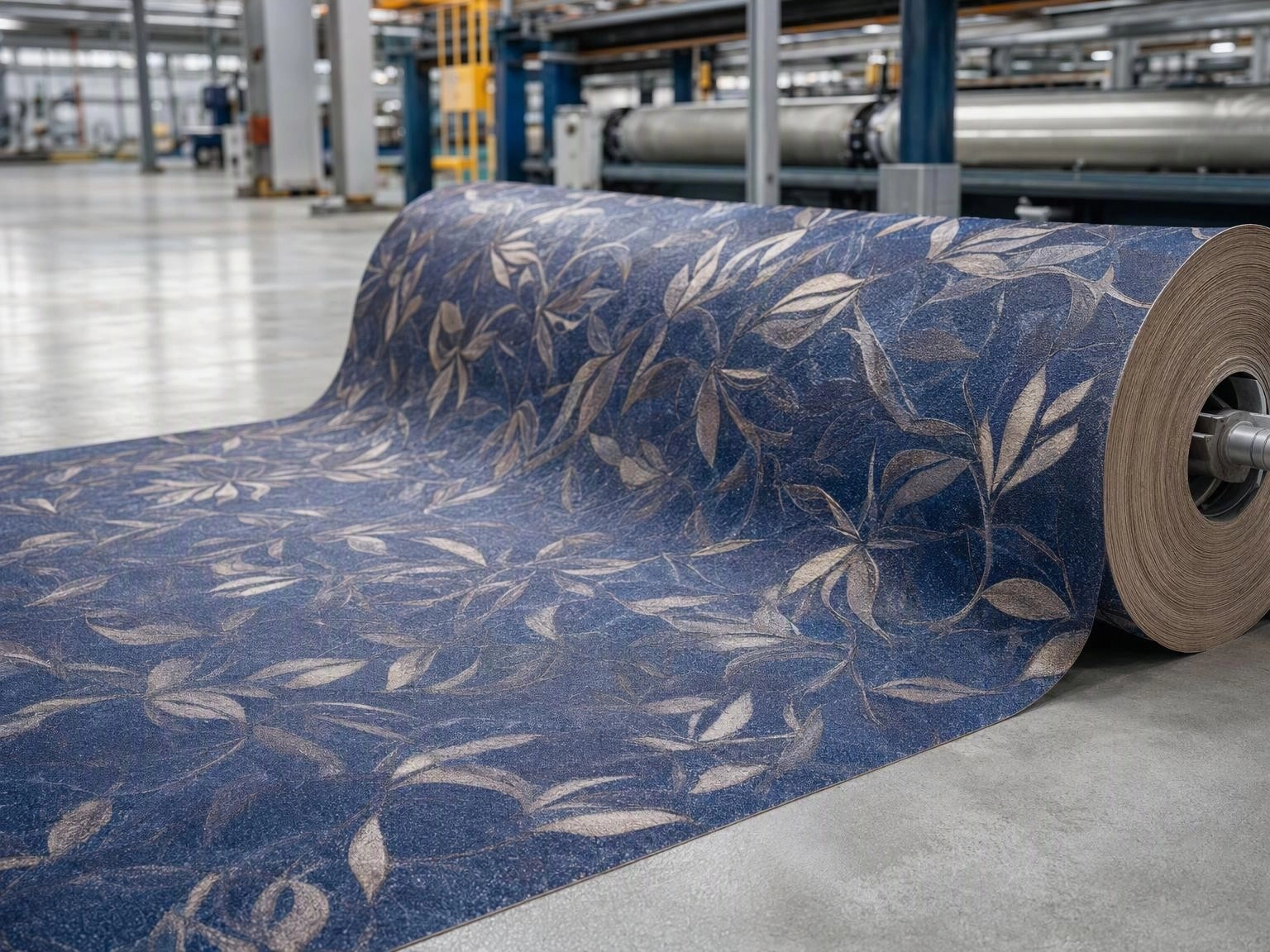
The layer stack and what each layer does
A flooring material is a layered construction, and its behaviour is decided by the stack rather than by any single layer. From the bottom up, a typical build includes a backing that provides dimensional stability and a degree of cushioning, a core or carrier layer that gives body and resistance to indentation, a decorative layer that carries the pattern, and a transparent wear layer that protects the pattern and takes the traffic.
Reading a specification without knowing which layer a figure refers to makes the number almost meaningless. Wear layer thickness and total thickness in particular are frequently confused, and they are not interchangeable.
Thickness and width in commercial terms
A total thickness of 2.4 to 2.6 millimetres places this material in the mid range for a decorative flooring product: thick enough to have body and to resist local indentation from point loads, and thin enough to remain flexible for handling and installation. The tolerance matters as much as the nominal figure, because thickness variation across a roll changes how the material lies.
A width of 150 centimetres is a commercially significant dimension. Wider rolls mean fewer seams per unit of floor area, which reduces both installation time and the number of joints where dirt and moisture can collect. It also means the material must be handled and stored with care to avoid creasing, since a wider roll is exposed to more handling stress at the edges.
How the wear layer delivers performance
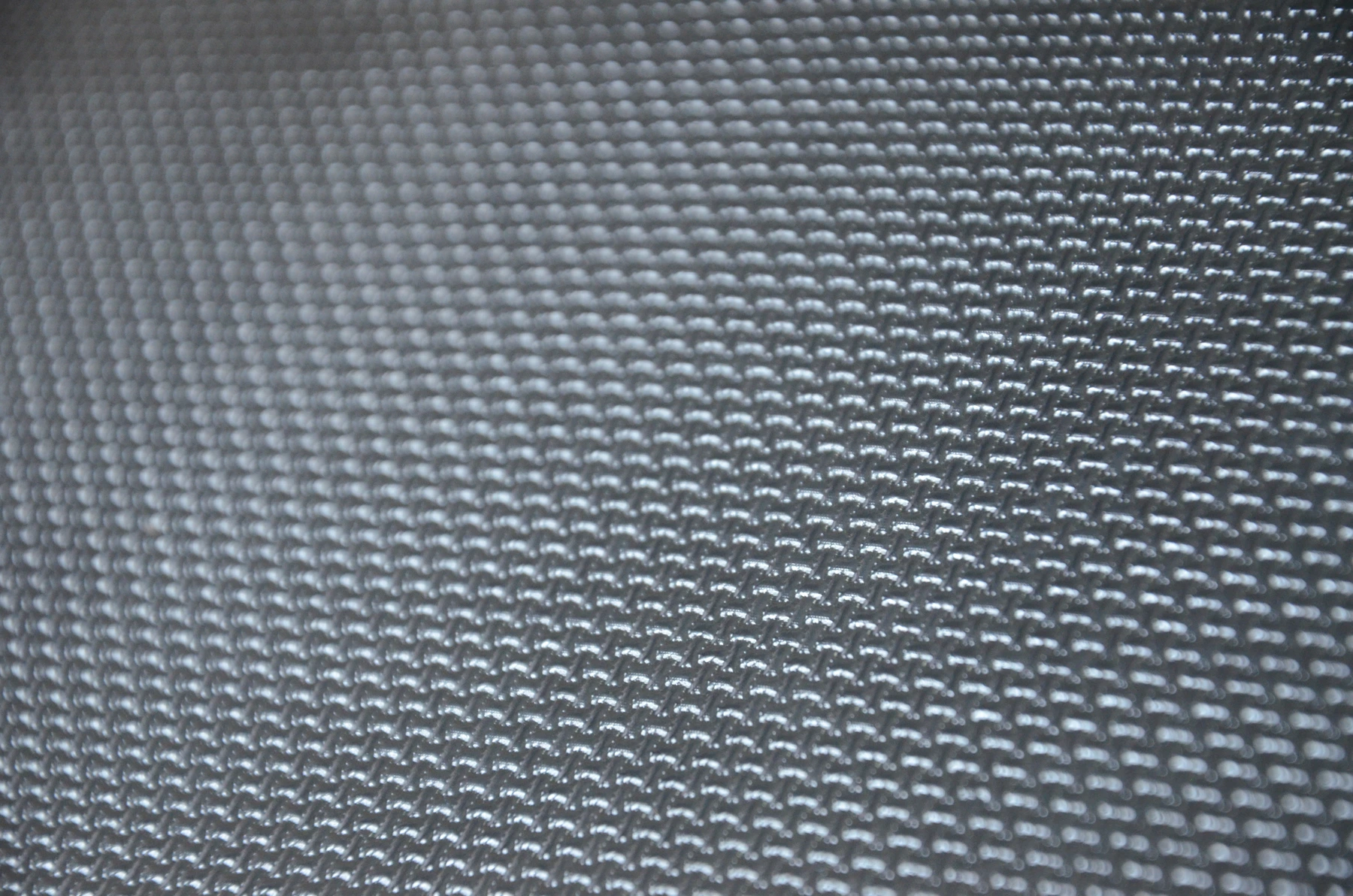
The wear layer is the transparent surface that traffic actually contacts, and its thickness and formulation determine the three properties that matter most in service: resistance to abrasion, resistance to soiling and ease of cleaning. Abrasion resistance comes from the mechanical toughness of the layer and its ability to spread contact pressure rather than concentrate it.
Resistance to dust and dirt is only partly about hardness. A surface with the right level of slip and the right micro texture releases soil more readily than a perfectly smooth one, because soil adheres less strongly and cleaning removes it at lower effort. Surfaces that are too glossy for an application tend to show every mark, while surfaces that are too textured trap soil in the recesses. The optimum is application specific and should be chosen against the intended environment rather than on appearance alone.
Dimensional surface appearance and its trade offs
A pronounced three dimensional surface, often described as a deep or dimensional pattern, gives a strong visual impression and helps conceal small marks. The trade off is that deep recesses require more effort to clean thoroughly and can collect soil if the pattern scale is poorly matched to the environment.
Where a very bright, high clarity surface is required, the decorative layer is usually protected by a well matched wear layer that preserves the depth of the pattern without flattening it. Achieving both depth and brightness together is a finishing challenge: the gloss level of the wear layer has to be high enough to read as bright without being so high that reflections obscure the pattern at normal viewing angles.
Specification checklist for flooring material
A usable specification states total thickness with tolerance, width with tolerance, the construction of each layer, the wear layer thickness, the surface finish including gloss level and pattern depth, and the test conditions and results for abrasion and indentation. Certification and test reports should be tied to the specific construction, since a report issued for one layer build does not transfer to another.
Requesting a physical sample of at least a full pattern repeat and viewing it under the lighting of the intended installation is the final safeguard. Flooring is judged at a distance and on a horizontal plane, and neither of those viewing conditions is reproduced by a small swatch on a desk.