
The failure that flex testing predicts
A surface can be perfectly abrasion resistant and still fail at a fold. Repeated folding fatigues the coating, and when the coating reaches its limit it cracks along the fold line, often in a fine pattern that only becomes visible once the material is opened out. Flex testing exists to find that limit before the customer does.
How the flex test works
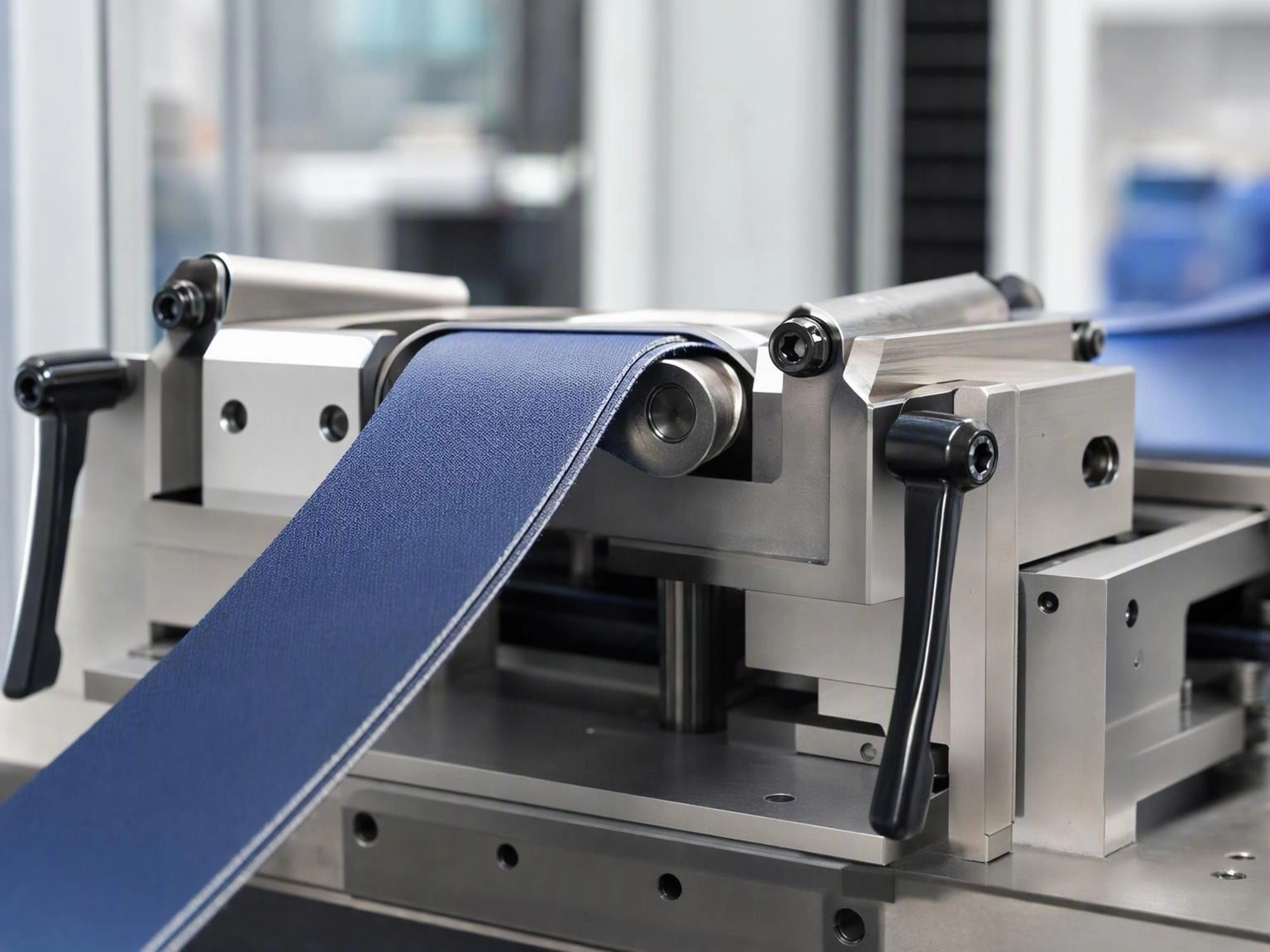
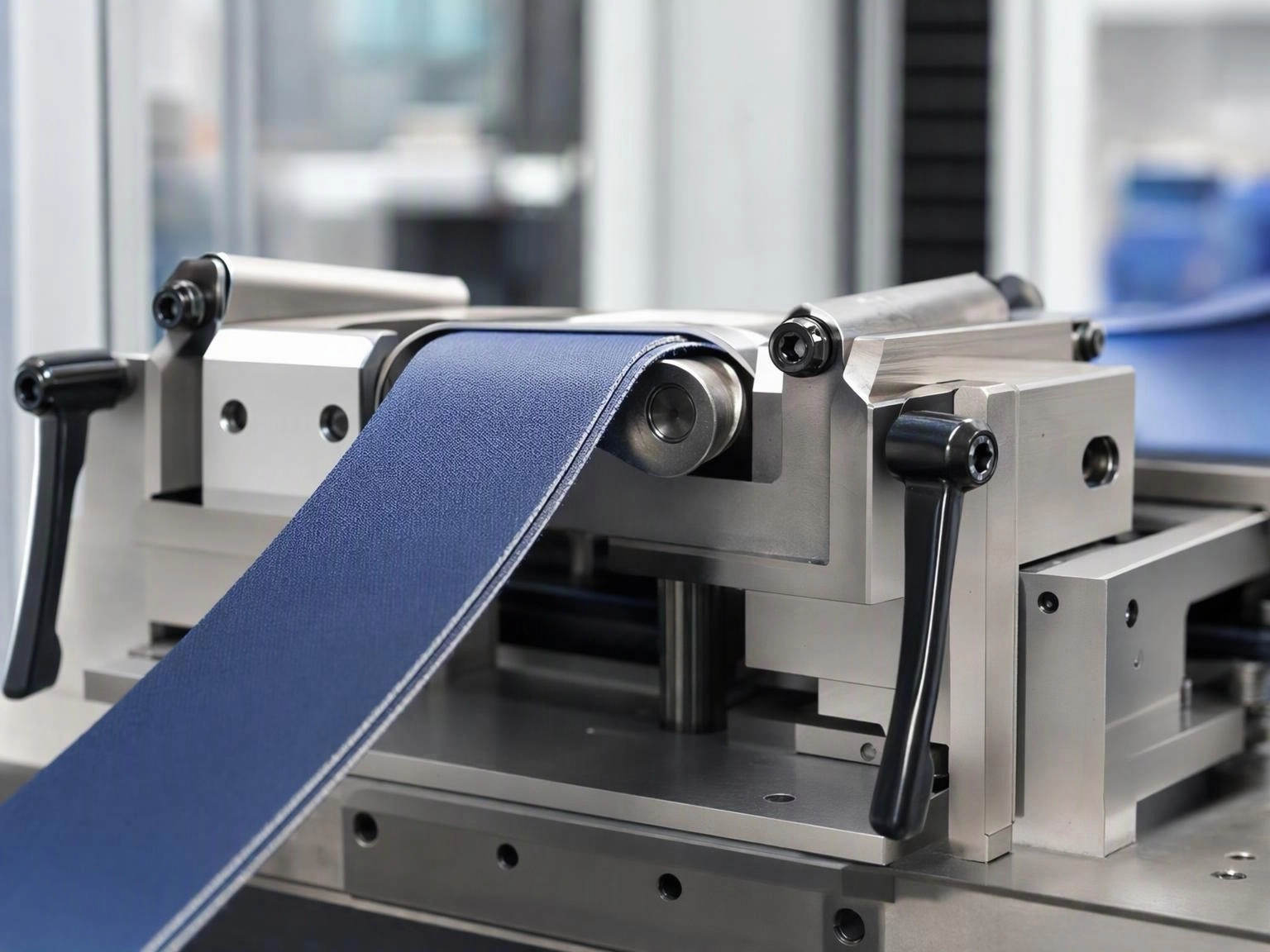
A sample strip is folded back and forth through a defined angle under defined tension, and the number of completed cycles is counted until the surface shows cracking or the coating breaks. Results are reported as a cycle count at the point of failure, together with the test conditions: the angle of fold, the tension and the temperature.
Temperature is the variable most often omitted and the one that changes the answer most. A coating that survives a large number of cycles at comfortable room temperature can fail much earlier in the cold, because a colder coating is less able to deform and recover. For any product used outdoors or in cold storage, the low temperature result is the one that matters.

What fifty thousand cycles represents
Fifty thousand flex cycles is a substantial figure for a coated surface, and it is the kind of result associated with systems chosen specifically for endurance rather than appearance alone. It indicates a coating that can tolerate being repeatedly folded and unfolded in normal use without developing a crack pattern.
Translated into application terms, this level of endurance supports use in upholstery and in soft goods that are handled and folded constantly. It also provides margin for the small imperfections of real use, such as a fold that lands on the same line every time a product is closed.
Which applications need a flex target
Any product that folds needs a flex target. Seating is the clearest case, because upholstery flexes with every user and the fold lines are predictable and repeatedly loaded. Bags and luggage flex at the gusset and at the top edge where the material is repeatedly opened. Footwear flexes across the vamp with every step, which is the most severe repeated flexing in common use.
For flat applications such as a rigid box wrap or a wall covering on a flat panel, flex performance is far less critical and specification effort is better spent on abrasion and appearance.
Improving flex performance
Flex endurance is governed by the elastic range of the coating system, the adhesion between the coating and the base, and the thickness of the coating relative to how far it must stretch. A coating that is well adhered to a base with similar compliance distributes the strain instead of concentrating it at the fold.
Practical improvements include selecting a system with a wider elastic range, reducing coating build where it is not needed for appearance, improving adhesion through the surface treatment stage, and avoiding over cross linking in the topcoat, which improves chemical resistance but reduces the ability to deform. These levers pull in different directions, which is why flex should be set as a target early and protected through the rest of the specification.