
What the abrasion test is actually measuring
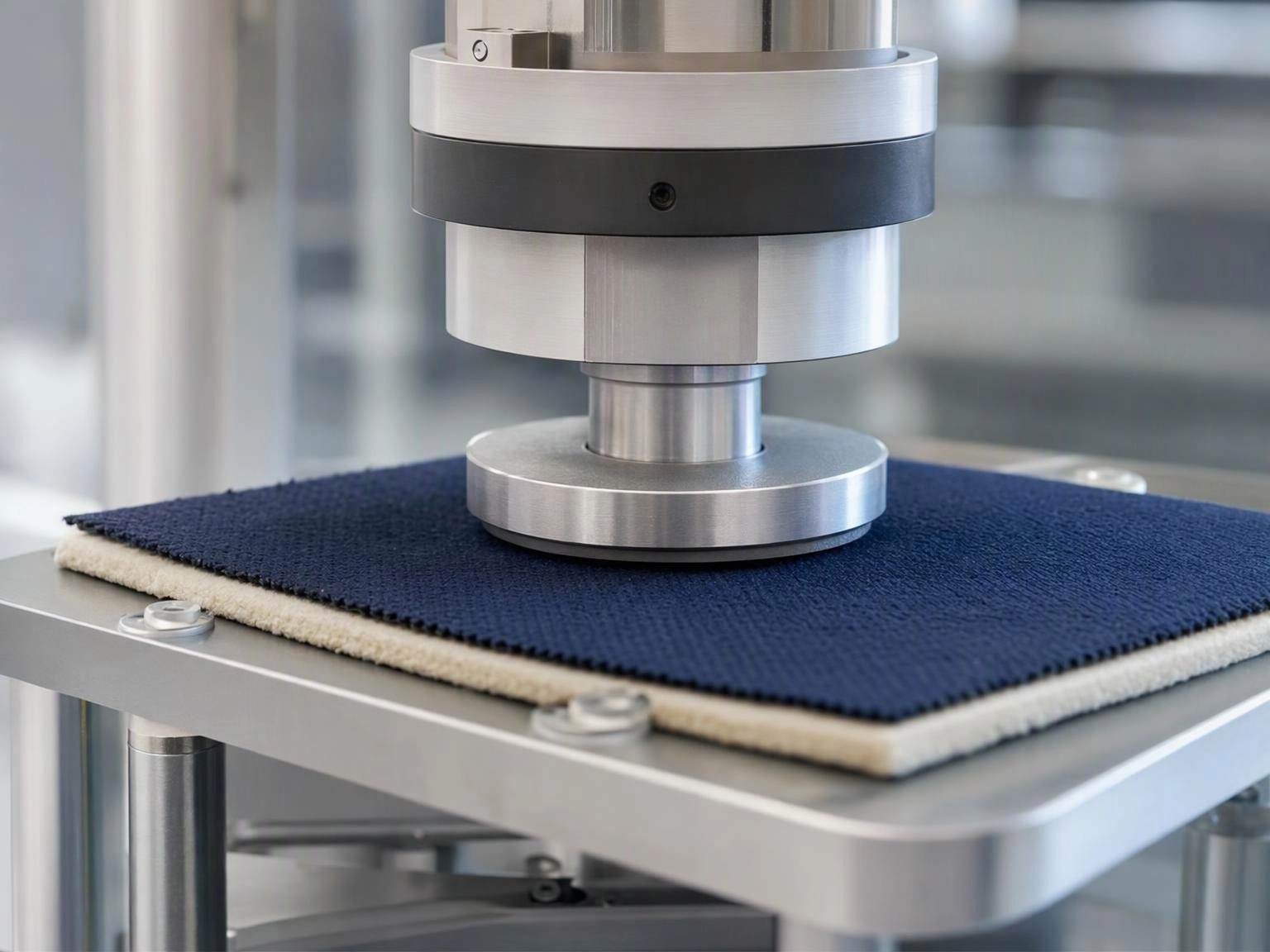
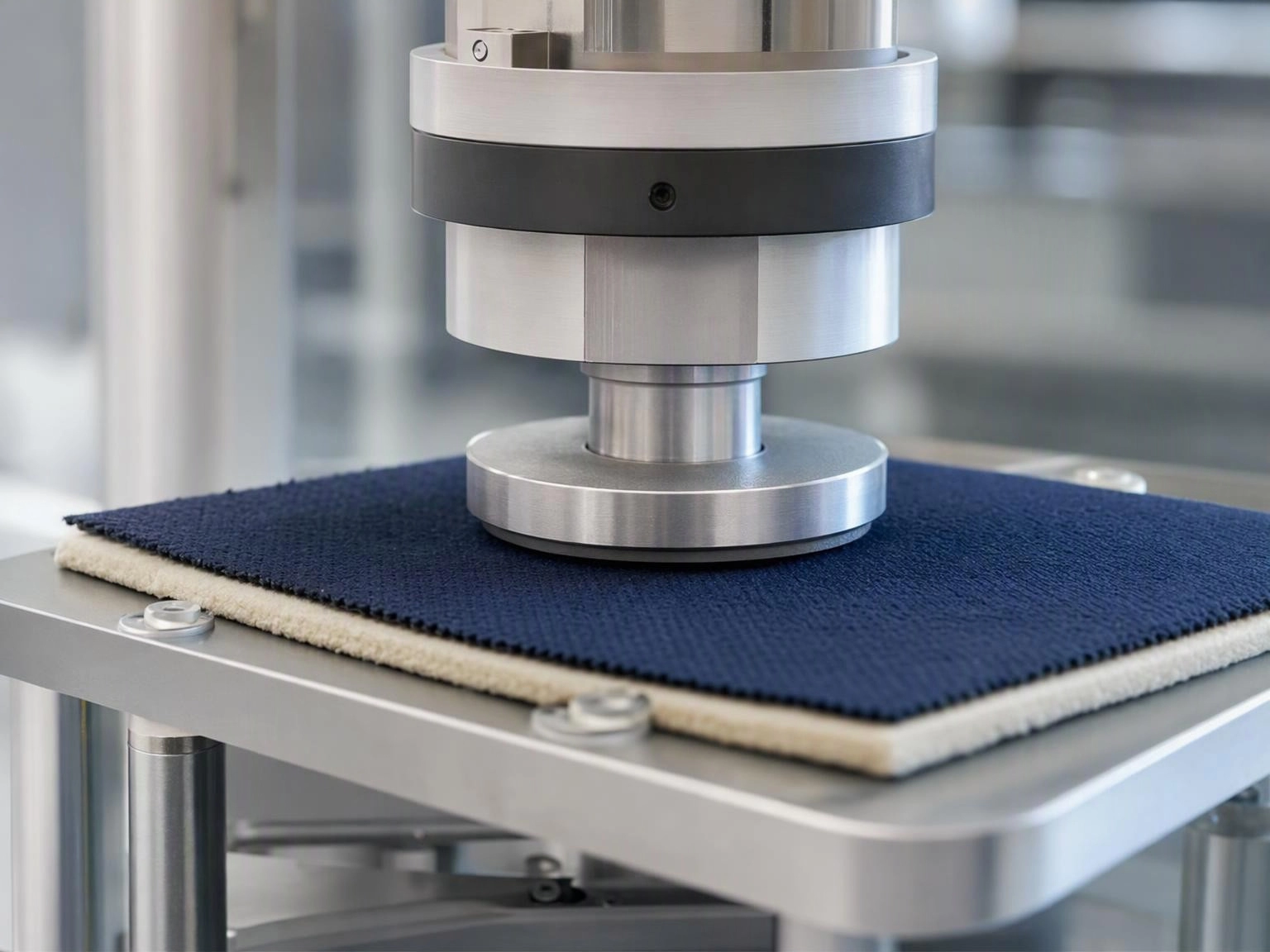
Abrasion testing measures how long a surface survives repeated rubbing before the colour changes or the structure breaks through. It is the test that separates two articles which look identical in a swatch book but behave completely differently after a year of use.
The result is a combination of test condition and cycle count. A figure without the load, the abrading medium and the endpoint definition is not a specification, because the same article can produce very different numbers under different conditions.
Reading a 500 gram 500 cycle result
In this commonly used condition, the sample is abraded with a fixed abrading head under a 500 gram load for 500 cycles, and the outcome is judged against a defined wear level. This is a demanding condition: 500 grams is heavy enough to work the surface layer rather than simply polish it, and 500 cycles is enough to expose a print that is not properly protected.
The pass criterion is that the article completes the run without breaking through. Breakthrough means the abrading head has worn past the surface layer to the extent that the underlying structure or a different colour becomes visible. An article that finishes 500 cycles under 500 grams is suitable for applications where the surface is regularly rubbed in normal use, such as luggage, footwear and frequently handled packaging.

Why a protective film changes the outcome
Multi colour printed articles generally reach this level by combining the printed design with a protective film laminated over it. The film acts as a continuous sacrificial layer that takes the mechanical energy of abrasion and spreads it, so the design underneath is not directly attacked.
The distinction matters when comparing suppliers. Two articles can both claim abrasion performance, but only the one that specifies the construction, meaning transfer design plus protective film, can be expected to reproduce the result at scale. An appearance-only comparison will not reveal which is which.
Choosing an abrasion target for a real application
The right target depends on contact pressure, contact frequency and acceptable appearance change, not on a desire to quote the highest number available. A decorative box handled once at retail needs far less abrasion resistance than a piece of luggage dragged through a terminal. Setting the target too high without purpose simply buys cost.
A practical approach is to define an expected service life, identify the most aggressive contact the article will experience, and then choose a tested condition that simulates it. The condition matters more than the headline figure, and both should be written into the purchase specification.
Complementary tests worth pairing with abrasion
Abrasion alone does not describe how an article will age. Adding a flex test captures cracking and delamination at folds. Adding dry and wet rub colour fastness captures marking and colour transfer. Adding a chemical resistance check for the specific liquids the product will contact captures the stains that users actually complain about. Taken together these tests describe the behaviour of a surface far better than any single number, and they are inexpensive relative to the cost of a field failure.