
What the back end process actually controls
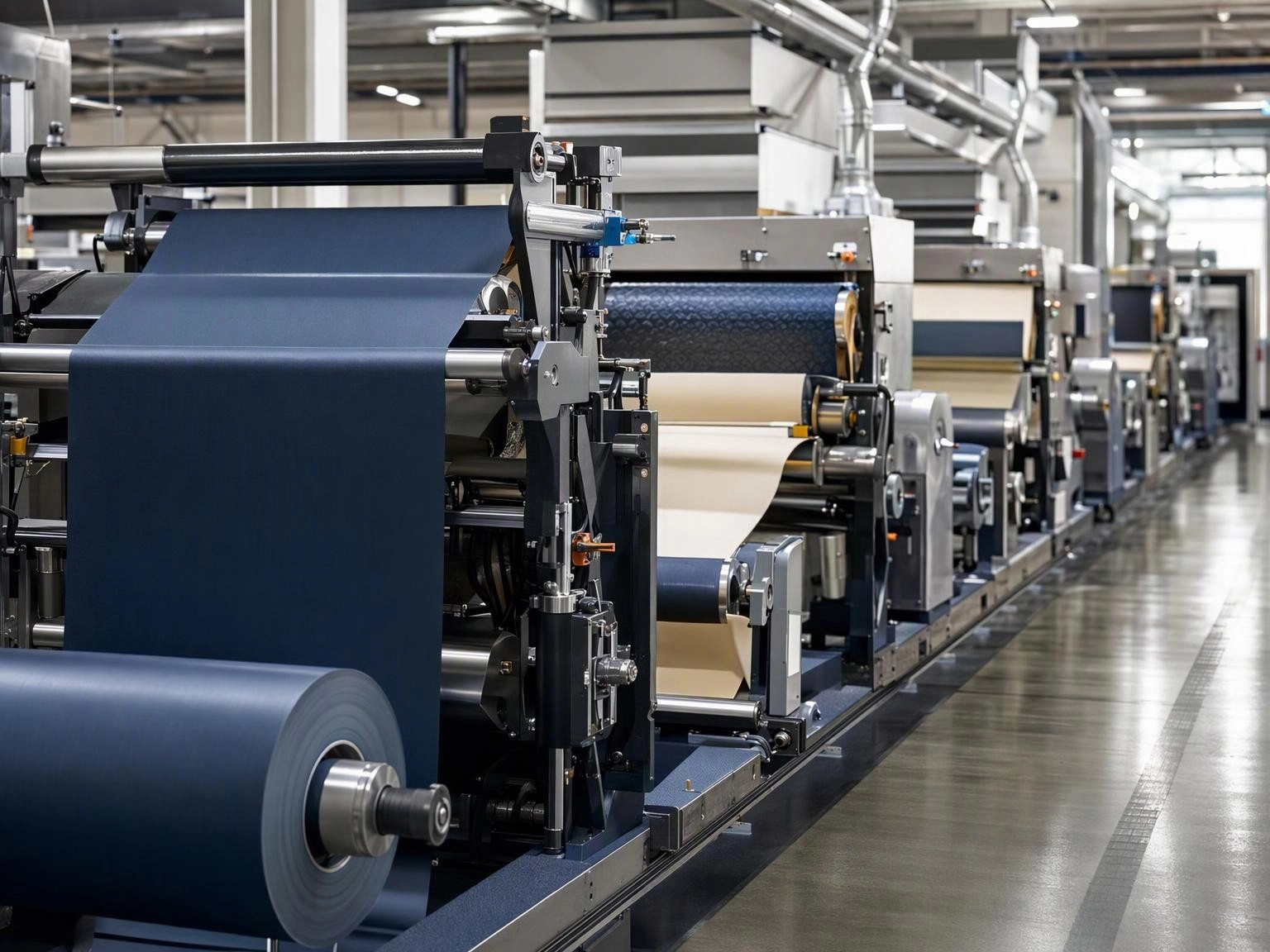
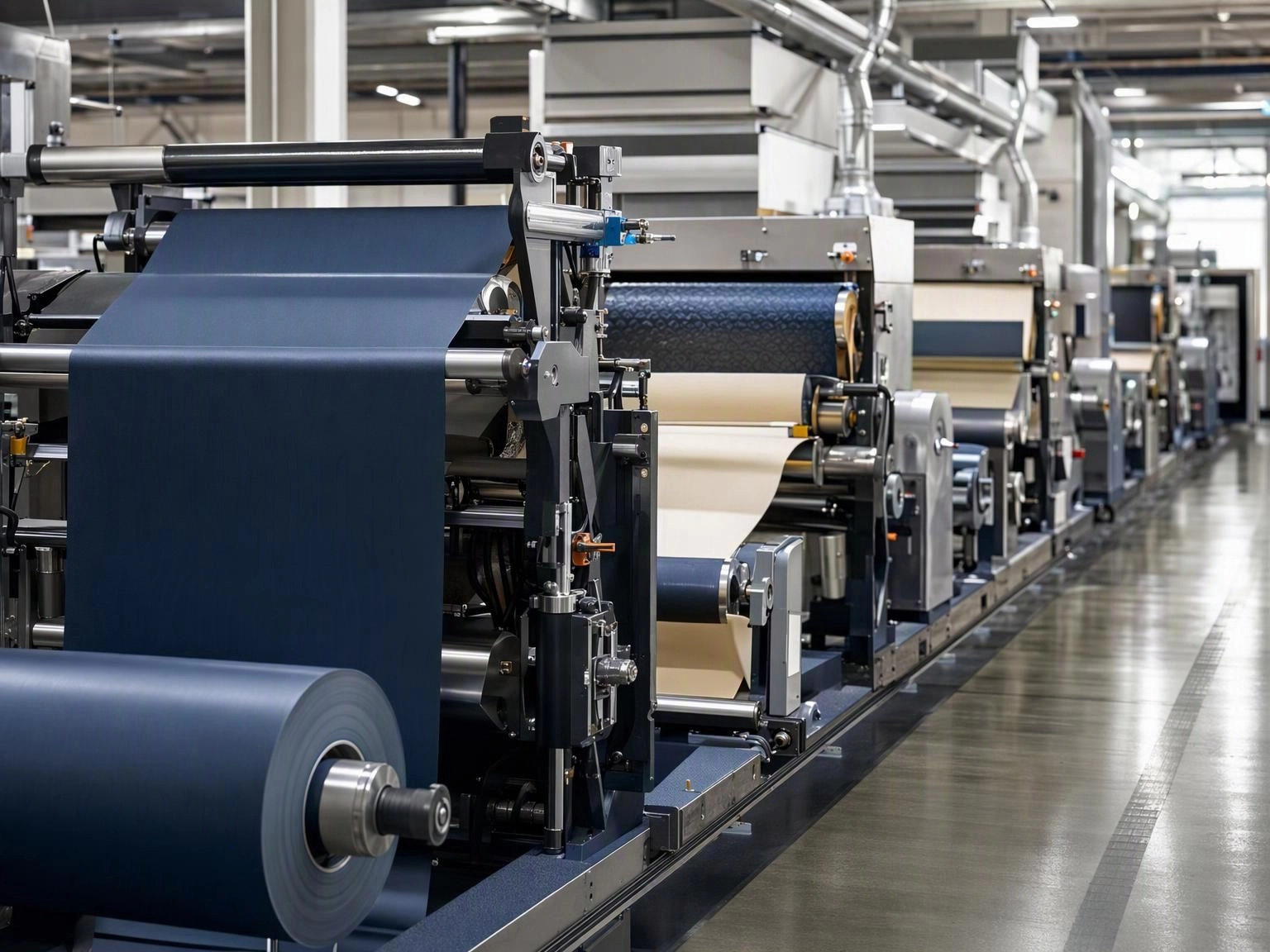
In coated fabric production the base material provides structure, but almost everything a buyer sees and touches is decided in the back end. This is the part of the line that runs after the base has been formed: printing, embossing, surface treatment and film lamination. Each stage solves a different surface problem, and together they decide colour, grain, gloss, hand feel and wear behaviour.
Because these stages are sequential, a decision made early constrains what is possible later. Embossing a grain too deeply before printing, for example, makes clean multi colour registration much harder. Understanding the order of operations is the fastest way to hold a finished look stable across a production run.
Stage one and two, printing and multi colour transfer
Printing lays down the base colour and pattern. On a solid colour article this is a single pass, but on a decorative article it becomes a registration exercise where each colour must land in the same position on every metre. Multi colour transfer film takes a different route: the pattern is pre-formed on a carrier film and transferred to the surface in one operation, which gives sharper edges and better colour layering than sequential printing on a textured surface.
The practical consequence is that print quality is judged on consistency rather than on a single sample. Two metres cut from the start and the end of a roll should look like the same product.
Stage three, embossing and grain reproduction
Embossing is where the surface gains its three dimensional character. A heated engraved roll presses a grain into the coating while an opposing roll supports the back. The variables that matter are roll temperature, nip pressure, line speed and cooling before release. Too little heat and the grain is shallow and fades with use. Too much and the coating is weakened or the grain distorts at the edges.
Grain depth also has a direct effect on hand feel. A shallow emboss reads as a fine, smooth leather. A deep emboss reads as a rugged, natural hide and conceals minor scuffs better, at the cost of being harder to clean in fine recesses.
Stage four, surface treatment and topcoat
The surface treatment stage, sometimes called the topcoat, is the layer that faces the world. It sets gloss level from matt to high gloss, controls how the material feels to the hand, and carries most of the resistance to rubbing, alcohol, white spirit and daily scuffing. It is also the stage that protects whatever the print stage produced.
A well matched topcoat can make a modest print look expensive, and a poorly matched one will lift a good print away from the grain and make it look flat. Gloss and hand feel should always be agreed against a physical approved sample rather than a photograph.
Stage five, film lamination
Lamination applies a protective film, or in the transfer route the transfer film itself, and bonds it to the surface. This is the stage that turns a decorative surface into a durable one. In multi colour transfer work with a protective film, the bonded film is what allows the finished article to survive an abrasion test of 500 grams over 500 cycles without breaking through.
Bond strength is the critical quality checkpoint here. A film that looks perfect on day one but delaminates after flexing has failed, so peel and flex checks belong in routine production control rather than only in initial sampling.
Sequencing as the real quality lever
Most back end quality problems are sequencing problems. Loss of grain depth after printing, colour that shifts when the topcoat is applied, film that lifts at a fold, gloss that varies along a roll. Reading the process as an ordered chain, and agreeing the acceptance criteria of each stage before the next begins, prevents most of them. When a specification is fixed only at the end of the line, corrective action becomes guesswork.