
Why grain reproduction is an engineering task
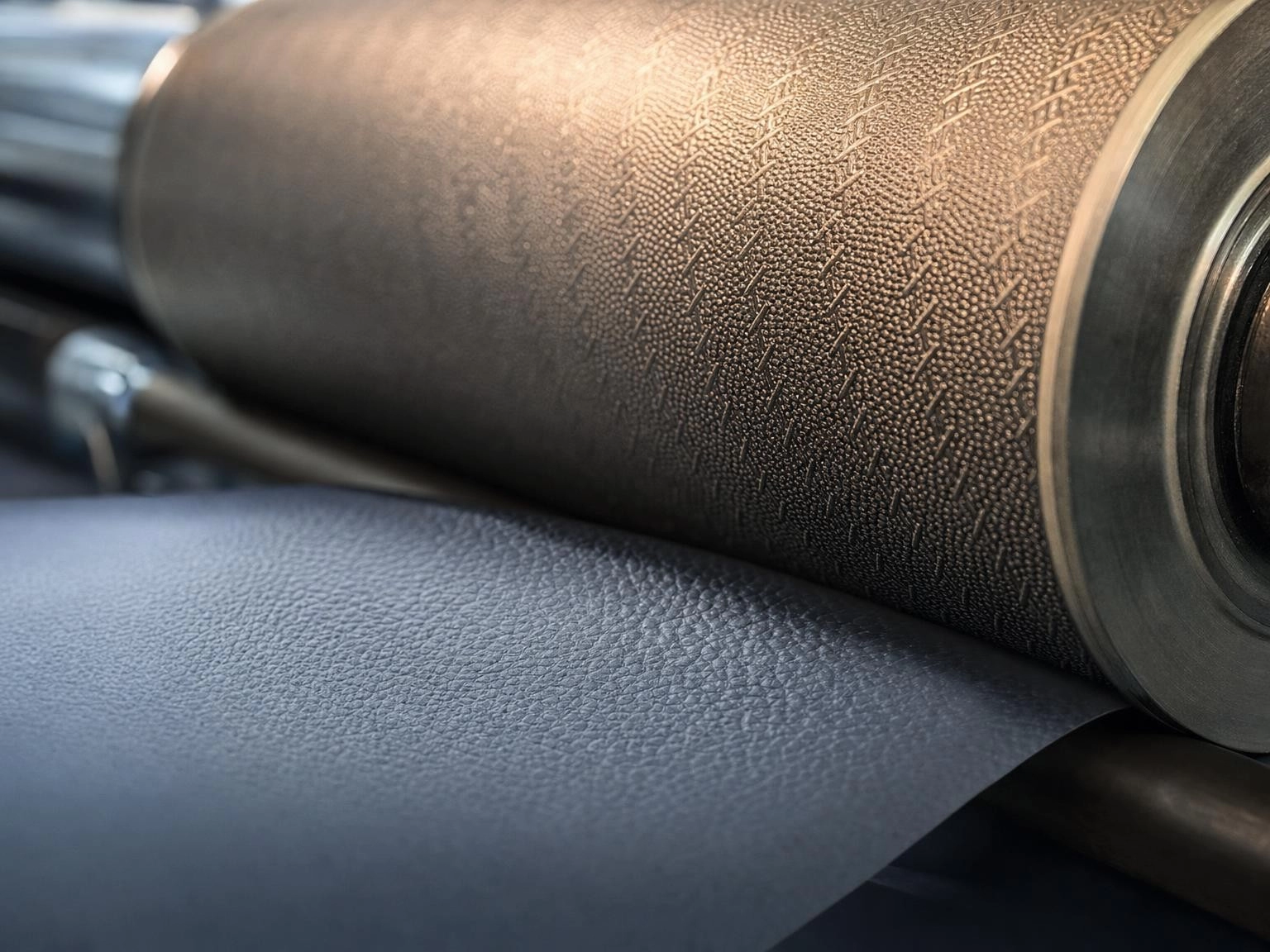
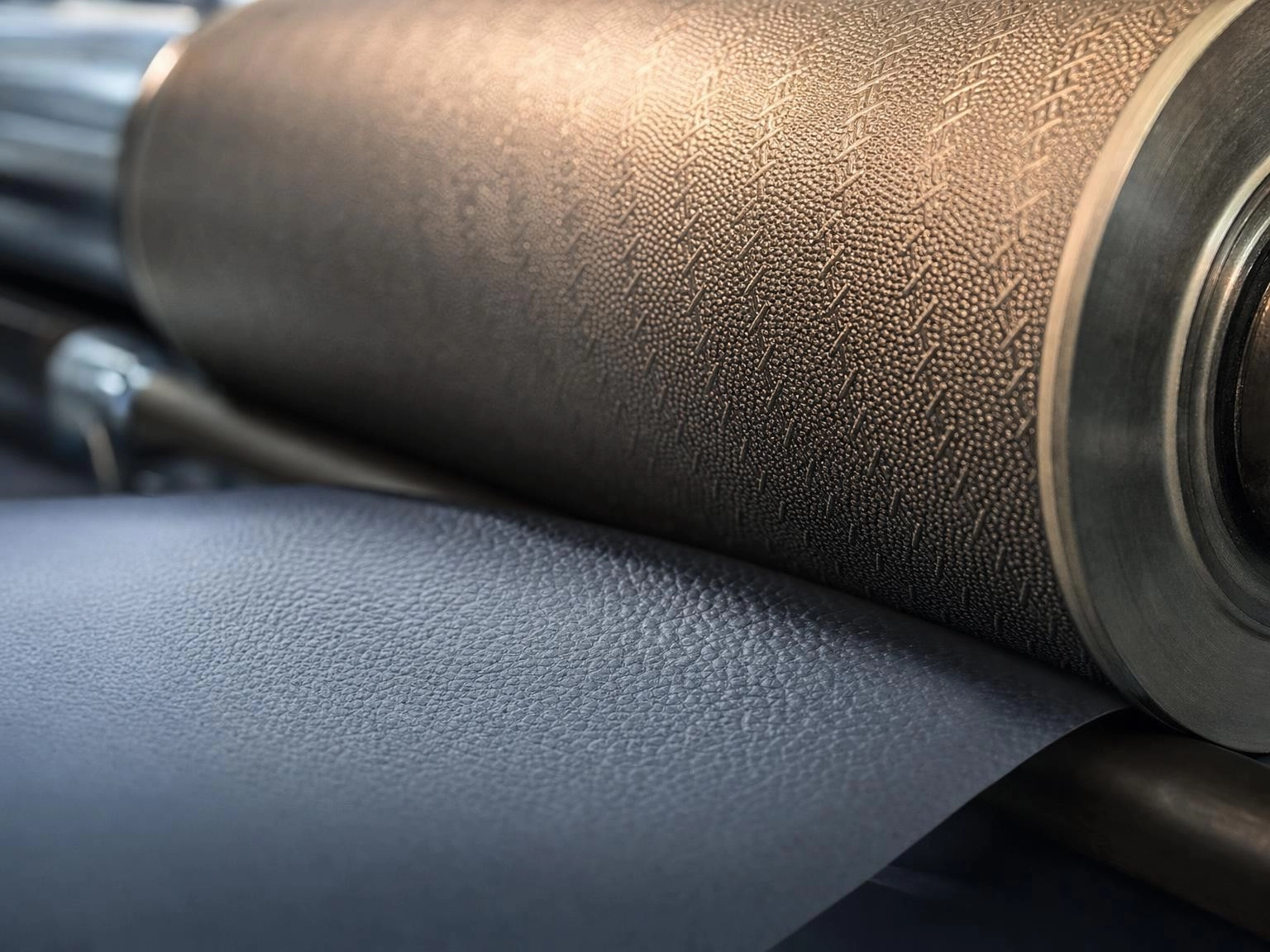
Natural hide is a record of growth, movement and wear. Reproducing that record on a coated fabric is not a matter of choosing a pattern from a catalogue, but of controlling how a heated engraved surface transfers its geometry into a thermoplastic coating. Grain reproduction is therefore an engineering task in temperature, pressure, dwell time and cooling, with the pattern design only the starting point.
Building the pattern into an engraved roll
The grain begins as an artwork study. A usable grain has variation: pores of different sizes, faint directional flow and small irregularities that read as natural. A pattern that is perfectly regular reads as plastic. Once approved, the pattern is engraved into a metal roll, and the engraving depth is the single most important variable carried into production.
Engraving depth is usually expressed as a working range rather than a single figure, because the depth interacts with the coating thickness. A grain pressed into a thin coating behaves differently from the same grain pressed into a thick one.
Temperature pressure and dwell time
Three variables work together during embossing. Temperature softens the coating so it can accept the pattern. Pressure determines how completely the engraved geometry is transferred. Dwell time, set by line speed and roll diameter, decides how long the softened coating is held against the roll.
Raising any one of them partly compensates for the others, which is why a line can appear to run correctly while one variable is drifting. The reliable approach is to fix two and adjust one, then record the combination that produced the approved sample so it can be reproduced on a different line or shift. Cooling before release matters as much as the press itself: if the coating is still soft when it leaves the roll, the grain depth recovers and the pattern blurs.
From engraving variables to hand feel
Hand feel is the sum of depth, pattern scale and topcoat. A fine, shallow grain with a light topcoat reads as smooth and supple, suitable for small leather goods and soft handbags. A deep grain with a heavier topcoat reads as substantial and hard wearing, suitable for luggage, footwear and upholstery.
Scale matters alongside depth. The same depth applied to a large pattern feels coarser than when applied to a small one, because the surface area of each feature is larger. Grain design should therefore always be judged at the final viewing distance of the product, not on a small swatch held close to the eye.
Common defects and what causes them
Weak or faded grain usually traces back to insufficient temperature or a coating that has fully cured before embossing, leaving it unable to flow. Shiny or glazed patches indicate a roll surface problem or local pressure variation. Double grain or ghosting indicates registration drift between the emboss and the print. Depth that varies along the roll points to temperature or pressure variation across the roll face rather than along the line.
Recording the parameters that produced each approved sample is what makes these defects diagnosable. Without a parameter record, a shift in appearance becomes an argument rather than a measurement.