Four systems and four different answers
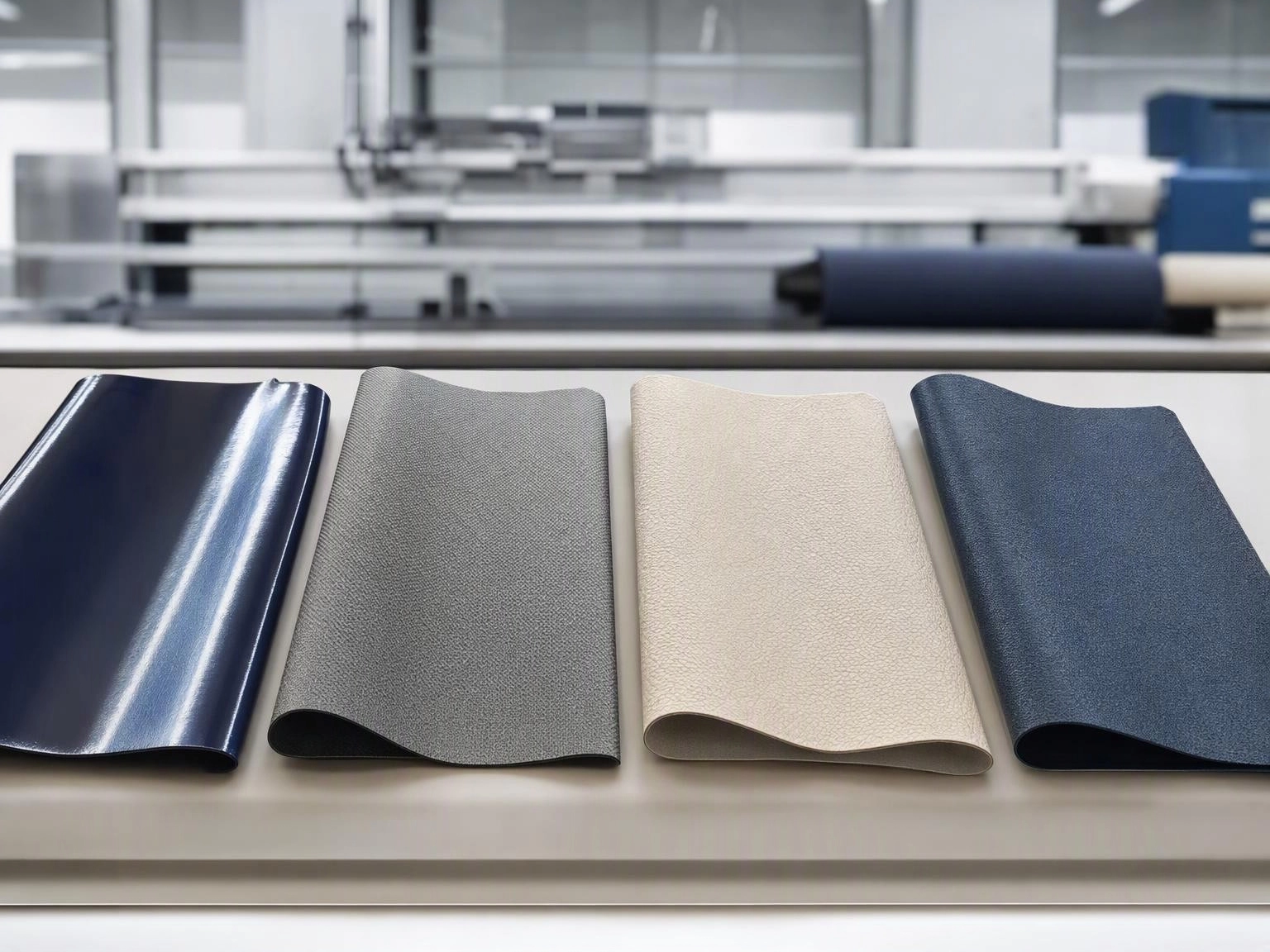
When a project starts from performance rather than from a catalogue, the first real decision is the coating system. TPU, solvent free PU, solvent borne PU and waterborne PU can all produce an attractive surface, but they differ in how they behave under flexing, how they respond to temperature, how they feel in the hand and how they are processed.
Treating them as interchangeable substitutes for one another is the most common cause of a material that passes the sample stage and then disappoints in production.
TPU as the high flex performer
Thermoplastic polyurethane is a melt processable system with excellent elastic recovery. Its standout property for coated applications is flex endurance: it can be taken through a very high number of flex cycles without cracking, and it holds that performance at low temperature better than most alternatives.
TPU also forms three dimensional and structured surfaces well, which is why it is often chosen where the product needs a raised, dimensional appearance and light weight at the same time. The trade offs are usually cost and a slightly firmer hand than a soft PU.
Solvent free PU and the low emission route
Solvent free PU systems are formulated without volatile solvent as the carrier, which reduces emission and simplifies the drying stage because there is less solvent to remove. They offer good flexibility and a soft hand, and they are often chosen where a durable surface is needed with a lower environmental footprint in the process.
The processing window can be narrower than for solvent borne systems, because viscosity and reactivity have to be managed without the adjustment range that a solvent provides. That places more weight on tight line control, which is a process capability question as much as a material question.
Solvent borne PU and the widest processing window
Solvent borne PU is the most established system and the most forgiving to process. The solvent gives wide latitude in viscosity, wetting and drying, which makes it easy to tune for a particular surface appearance and hand feel. It is frequently the system behind deep embossed and high gloss finishes because the coating can be adjusted precisely before curing.
The cost is environmental and occupational: solvent handling, recovery or abatement and workplace exposure controls. Where these are already in place, the system remains competitive on performance per unit of cost.
Waterborne PU and the balance point
Waterborne PU replaces organic solvent with water as the carrier. Emission is low and the workplace profile is favourable, and modern formulations have closed much of the historical performance gap with solvent borne systems. The remaining considerations are drying energy, since water is harder to remove than solvent, and sensitivity to humidity during film formation.
For many decorative and semi technical applications, waterborne PU now delivers an acceptable balance of appearance, hand feel and durability. It is less often the first choice where extreme flex endurance or very high chemical resistance is the governing requirement.
How to choose in practice
The decision is best made by ranking the governing requirement first. If flex endurance at low temperature governs, TPU is the natural candidate. If a very specific surface appearance and hand feel govern, solvent borne PU provides the widest control. If process emissions govern, solvent free and waterborne systems lead. If cost governs, the answer depends on volumes and on what abatement already exists on the line.
Because these systems process differently, the choice should be made before sampling rather than after, so that the sample that is approved is one the line can actually reproduce.