
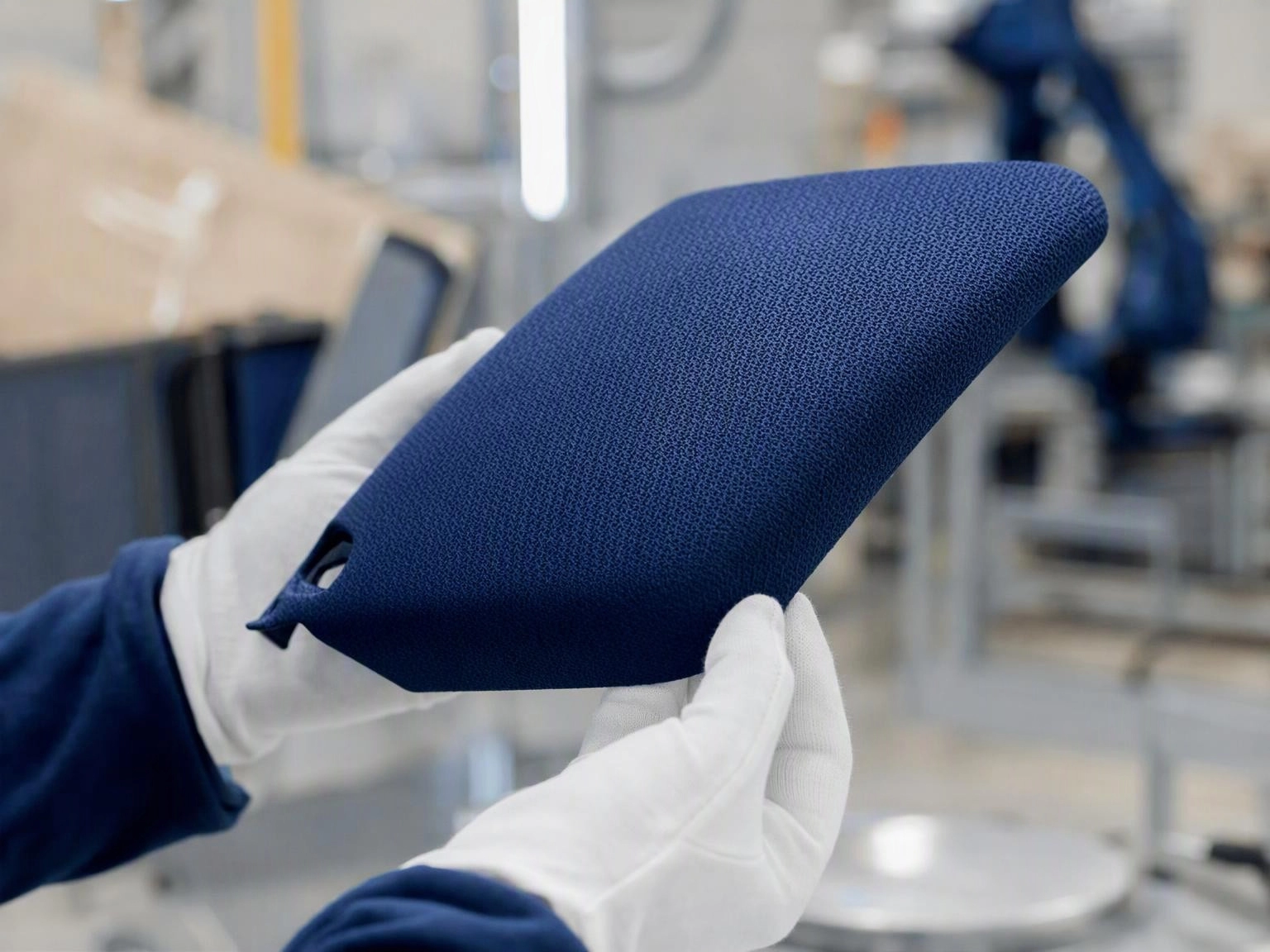
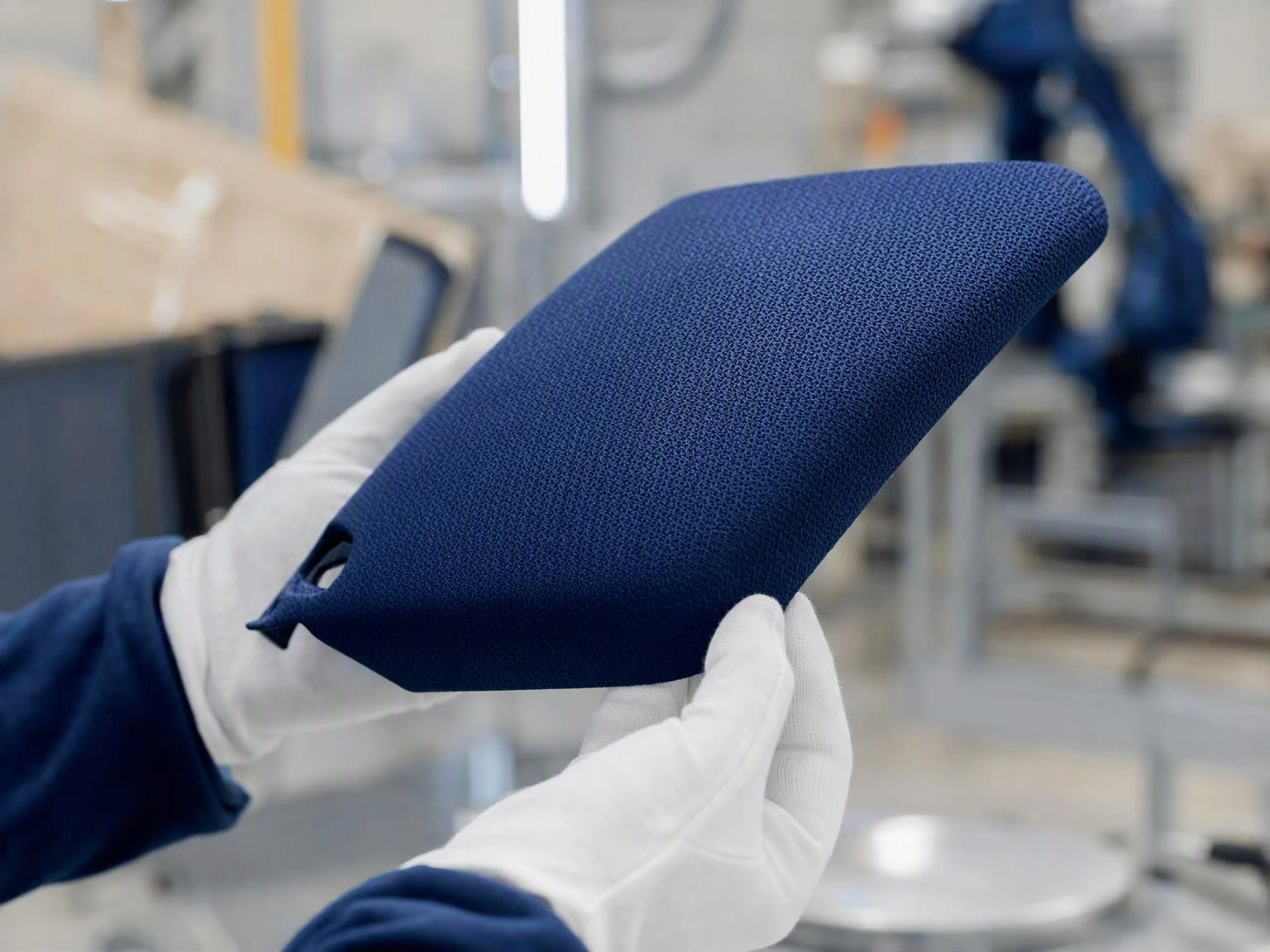
Why lightness and depth pull in different directions
A dimensional surface, with visible relief and a strong three dimensional read, is naturally associated with thickness. Thicker material carries more depth, but it also carries more weight, and in consumer products weight is felt immediately in the hand and affects shipping cost, packaging design and how the product is perceived as either premium or cumbersome.
Forming depth without weight therefore means creating the visual and tactile impression of substance from thin material. This is achieved through the combination of coating system, emboss geometry and base selection rather than through adding thickness.
Coating systems suited to lightweight forming
TPU is particularly well suited to this task. Because it is melt processable and has a wide elastic range, it can be embossed and formed into raised structures and still recover without cracking. It holds dimensional shape well, which means a deep emboss on a thin base does not flatten in use.
A lightly built PU coating can also produce a dimensional look, particularly where the impression is created by emboss rather than by a foamed or raised structure. The choice depends on whether the required lightness comes from the base, from the coating, or from both, and on whether the product will be repeatedly flexed.
Emboss geometry as a weight saving tool
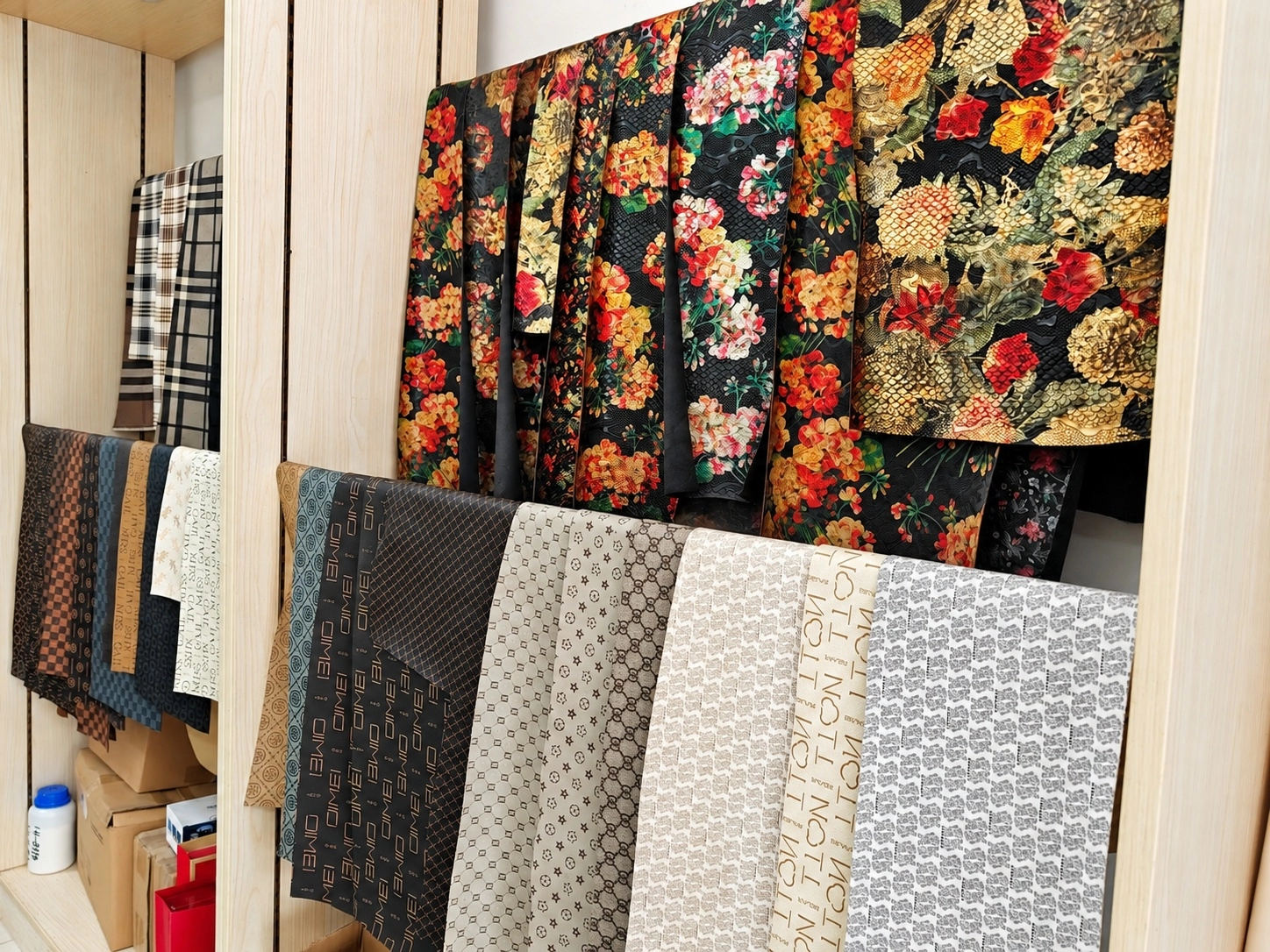
Emboss geometry can create apparent depth without material thickness. Large scale features read as substantial from a distance, and a pattern that combines broad shapes with fine detail gives the eye both scale and depth cues at low material weight.
Directional patterns can also emphasise dimensional character without adding depth, because the way light falls across a chamfered or ridged surface creates contrast that reads as relief. The key is that the emboss must be deep enough to survive the finishing operations that follow, including any topcoat application and any laminating step, since each of these can fill or soften the relief.
Base selection and the effect on hand
The base determines how the finished material behaves in the hand and how it takes a fold. A lighter base reduces weight and improves drape, making the material suitable for products that need to follow a curved form. Heavier bases held the surface flatter and resist creasing, which suits rigid and semi rigid applications.
Base behaviour also affects how a deep emboss reads. On a highly compliant base, a deep emboss can look soft and rounded, because the base deforms along with the surface. On a firmer base the same emboss reads as sharper, because the relief is held against a stable backing.
Trade offs to manage
Lightweight dimensional material makes some compromises. Thin material has less margin for hiding minor surface defects and less resistance to localised indentation. Deep relief on a thin base can also be more sensitive to pressure marks during handling, storage and transport, so packing design has to account for the surface rather than treat it as flat.
A practical approach is to define the weight budget first, then select the coating system and emboss geometry that deliver the required appearance within that budget, and confirm the choice by forming the actual product shape rather than judging a flat swatch. Dimensional material is judged in three dimensions, and a flat sample gives an optimistic impression of how a formed part will look.