
Two films with two different jobs
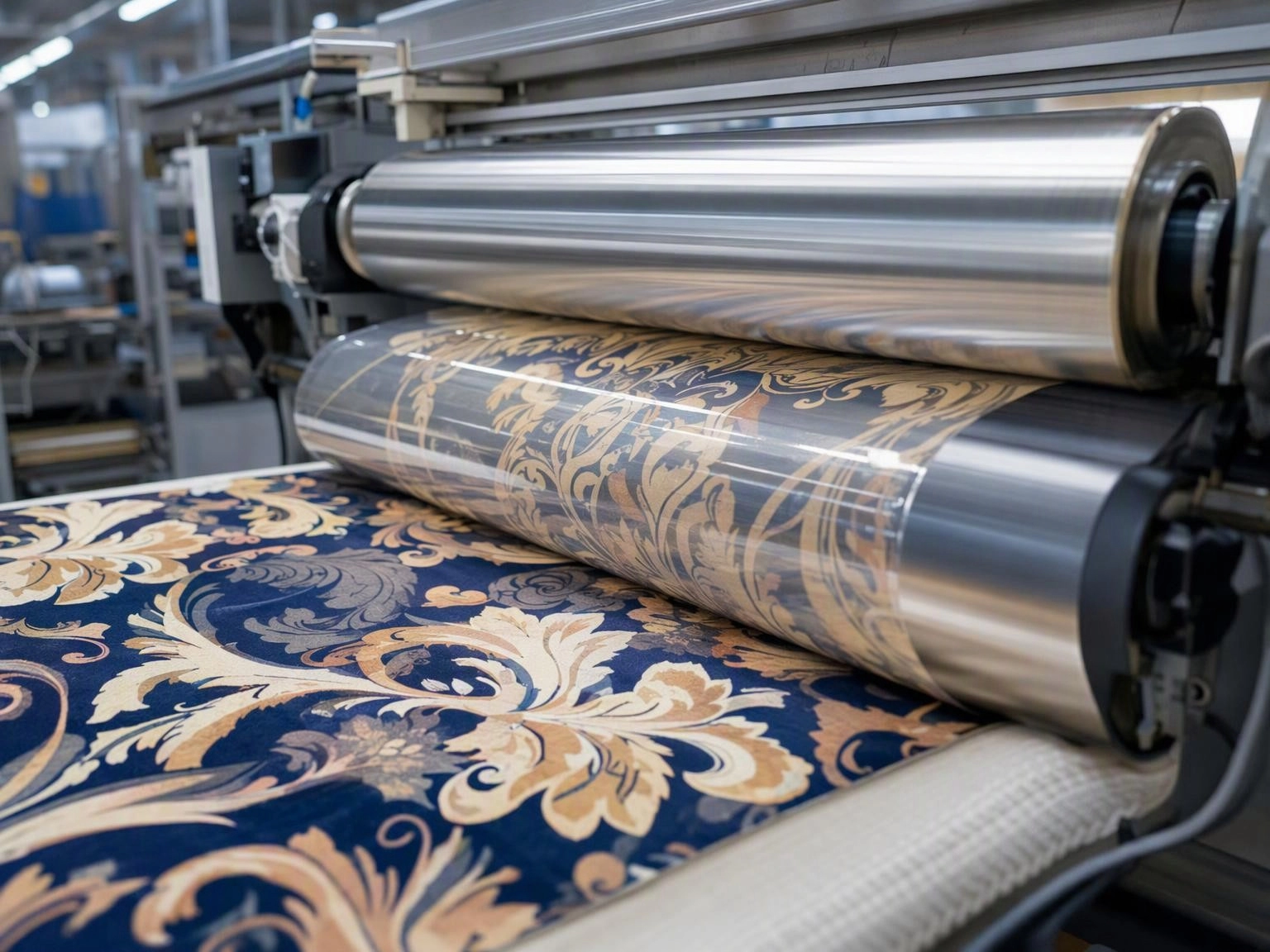
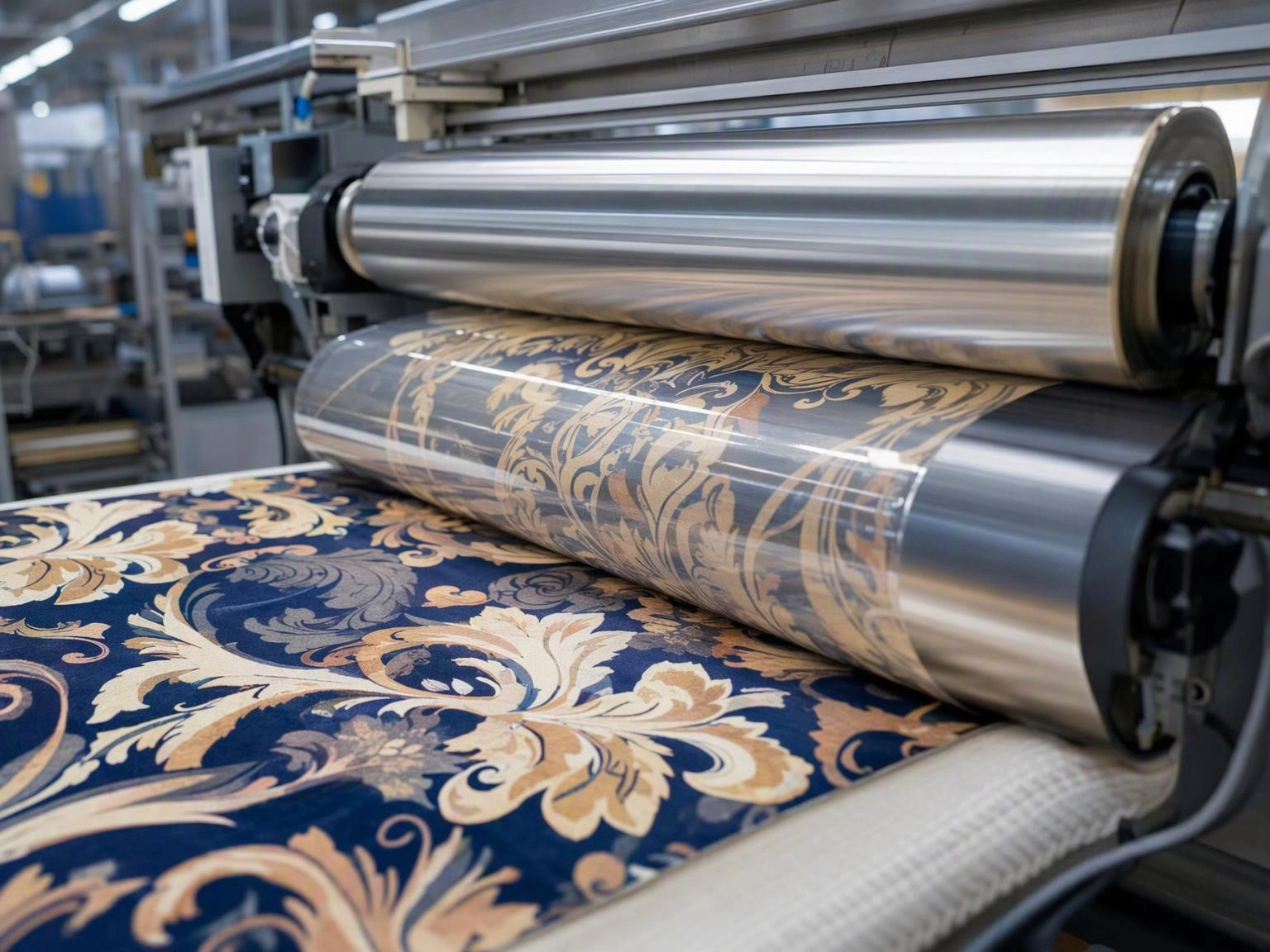
Multi colour synthetic leather often uses two films in sequence, and confusing their roles is a common source of specification error. The transfer film carries the design and releases it onto the surface. The protective film is bonded over the finished design to protect it. One is temporary and one is permanent, and each fails in a different way when it is specified incorrectly.
How transfer film carries a multi colour design
Transfer film is printed with the full decorative design on a carrier, in the reverse order to the final appearance. The coated fabric is then brought into contact under heat and pressure, and the design releases from the carrier onto the surface. Because every colour is applied in a single transfer rather than as successive print passes, registration is set during film production and cannot drift along the line.
That is the main advantage for patterned work. Edge definition stays sharp even where the surface is already textured, and colour density can be built up in layers that would be difficult to achieve by direct printing on an embossed surface.
Why a protective film changes abrasion performance
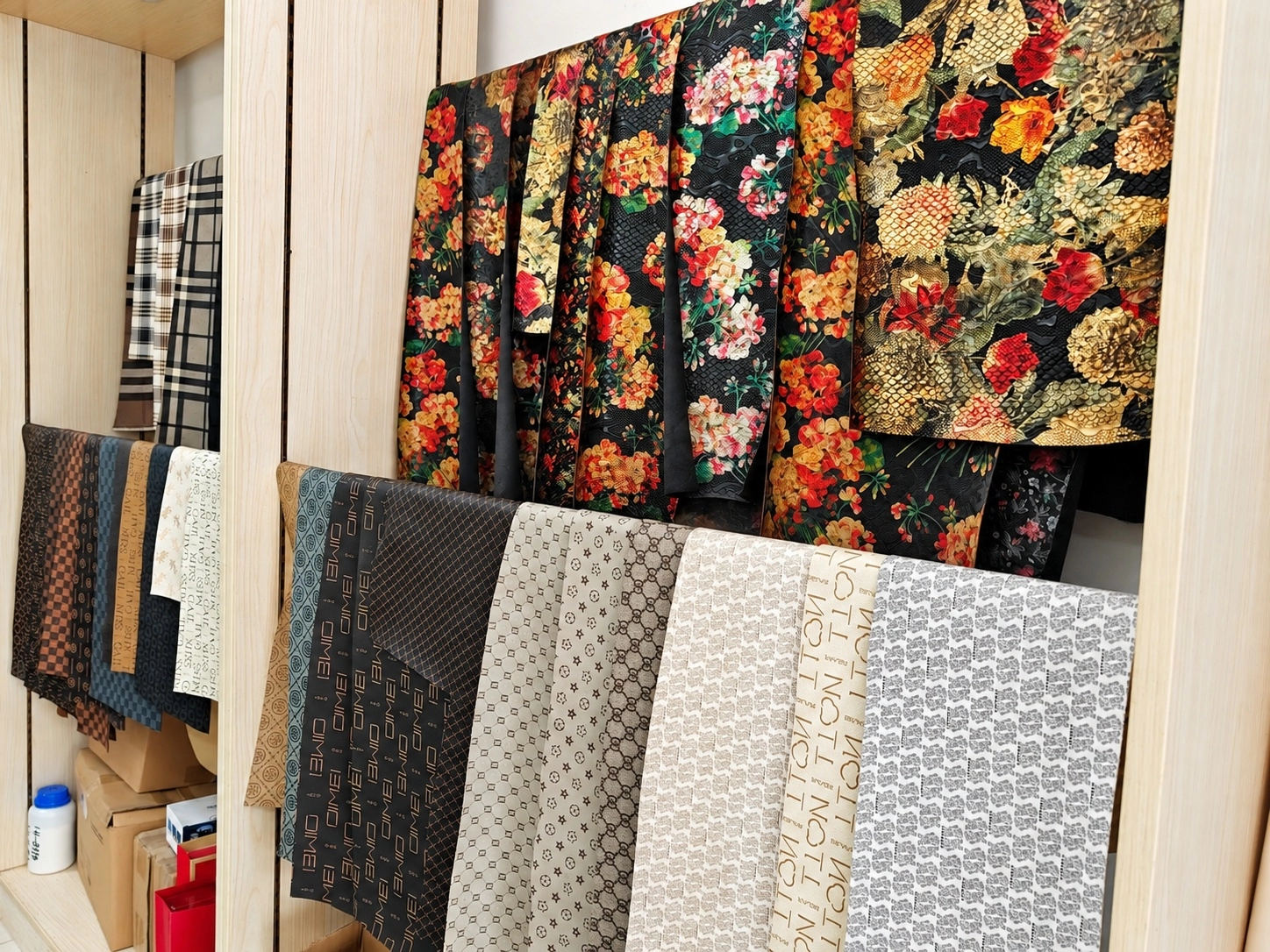
The protective film is bonded over the transferred design as a continuous layer. This is the step that converts a decorative surface into a wear resistant one, because the film absorbs the mechanical energy of rubbing instead of letting it attack the print. In practice this is what allows a multi colour printed article with a protective film to pass an abrasion test of 500 grams over 500 cycles without breaking through to the substrate.
Without the film, the same print may look identical out of the roll and then show colour loss at high contact points within normal use. The appearance check and the durability test measure different things, and only the second one reveals the difference.
Bond strength is the real acceptance criterion
A protective film that bonds weakly can pass an initial abrasion test and still fail in the field, because flexing opens the bond at folds and edges before the surface is worn. Peel testing and repeated flex testing belong in routine production checks, not only in first article approval.
Bond strength is governed by surface energy, bonding temperature, pressure and dwell time. Contamination on the surface before lamination is a frequent cause of localised lifting, which is why handling discipline between the print and lamination stages is part of the specification rather than housekeeping.
Specifying the pair correctly
When a project calls for deep colour and high durability, the correct way to specify is to name the construction rather than the appearance: multi colour transfer plus protective film, with a stated abrasion target and a stated flex target. Specifying only the look leaves the performance open, and a subsequent abrasion failure becomes difficult to attribute. Specifying both, with an approved physical sample held by both sides, keeps appearance and durability aligned through the run.